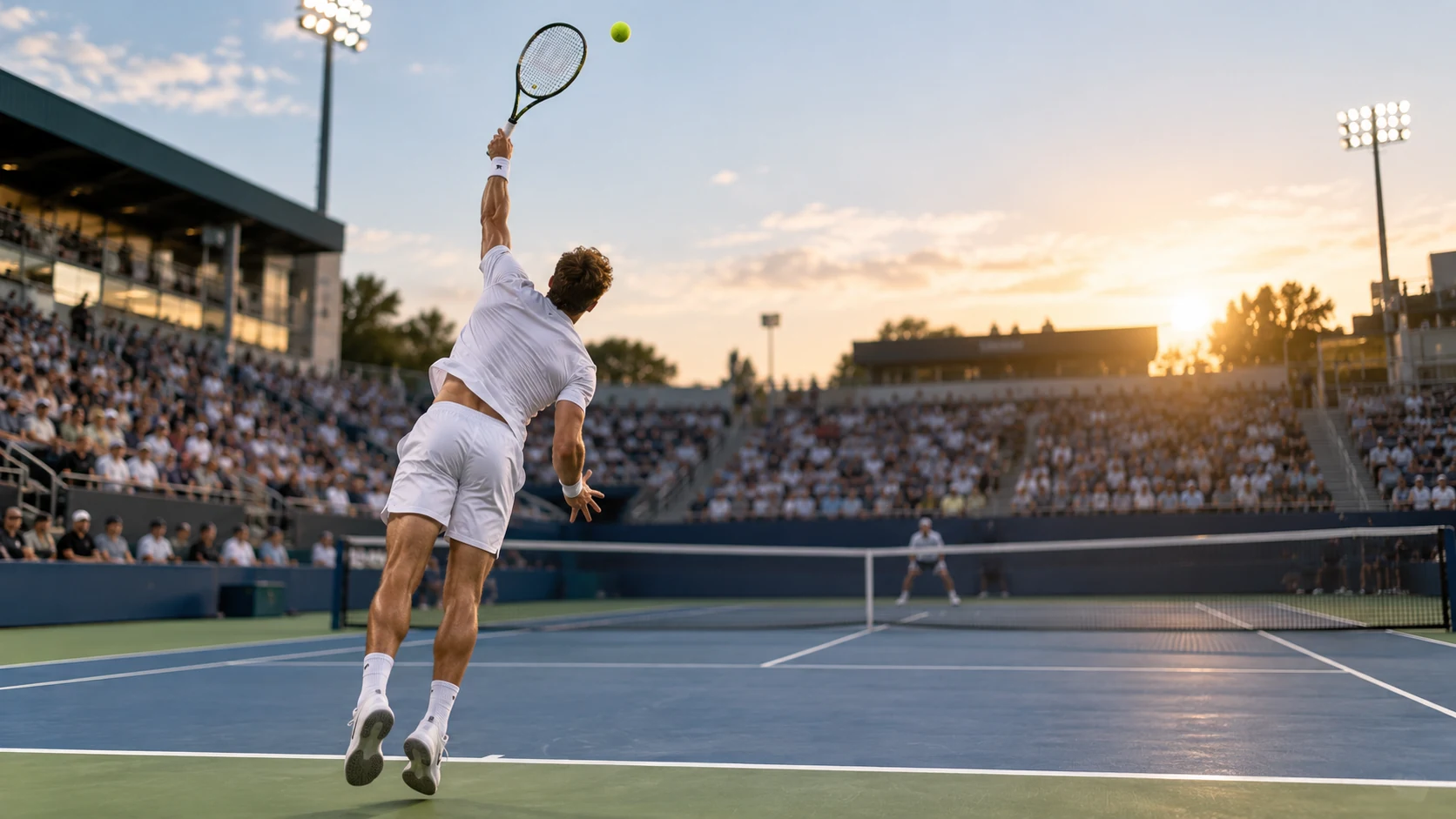
What serve-and-volley means
The server follows the serve toward the net instead of staying on the baseline. The goal is to use the serve to create a weak return and finish the point with a volley or overhead.
The serve sets up the route forward
The best target depends on the returner and the intended first volley. A body serve can jam the returner; a wide serve can open the opposite side of the court; a serve down the T can shorten the return angle.
Split step before the volley
After serving, the player moves forward and performs a split step as the returner strikes the ball. That moment of balance is essential because the first volley may arrive to either side.
First volley: depth before perfection
On a difficult first volley, depth and placement are often more important than trying to hit a winner. A solid ball deep into the open court buys time to move closer to the net for the next shot.
Why the style became less common
Modern return quality, racket technology and slower-feeling conditions on many courts have made constant serve-and-volley riskier. It remains useful as a surprise tactic and is still a valuable pattern on faster surfaces.