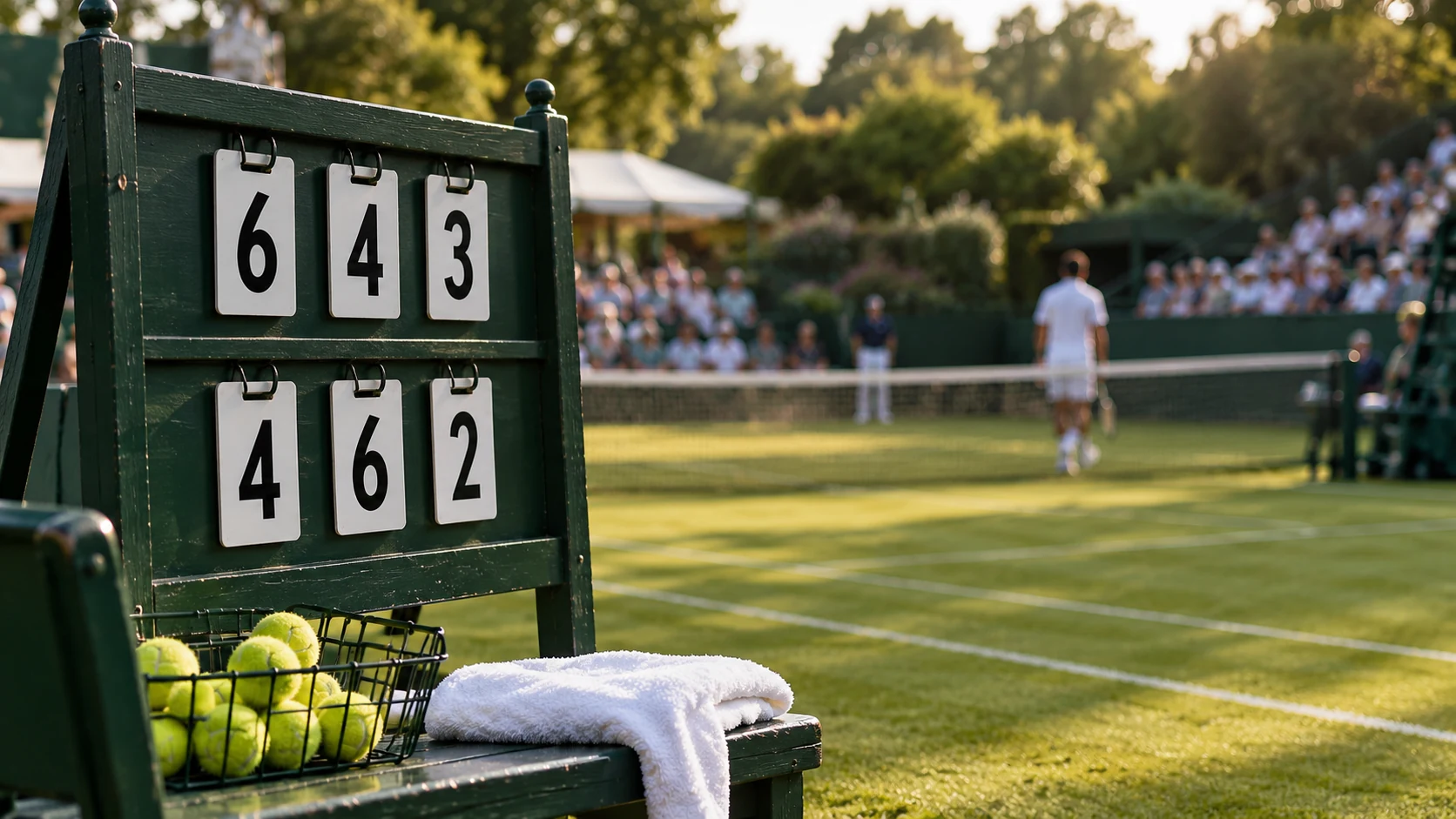
The only grass-court Grand Slam
Wimbledon remains the only Grand Slam tournament played on grass. The Championships’ courts use 100% perennial ryegrass, a choice designed to improve durability while maintaining consistent performance.
How the court is prepared
Wimbledon’s grounds team cuts the grass to 8 mm. The organisers note that the firmness and dryness of the soil are major factors in achieving a consistent bounce across the fortnight.
Weather changes perception
Grass is a living surface, so conditions before and during the tournament matter. Warm, dry weather can make the ball feel lighter and faster, while cool or damp conditions can make it feel heavier.
Why attacking tennis has a natural place on grass
A lower, quicker bounce can reward compact swings, strong serving and early court positioning. That is one reason serve-and-volley players such as Rusedski were historically comfortable on grass.
What to watch during a grass-court match
Look at return position, first-serve percentage, movement on worn baselines and whether players are willing to take the ball early. Those details often reveal who is adapting to the surface best.