Grass courts
Grass has traditionally rewarded quick reactions, first-strike tennis and confident movement forward. The living surface changes with weather and wear, so perceived court speed can vary even during the same tournament.
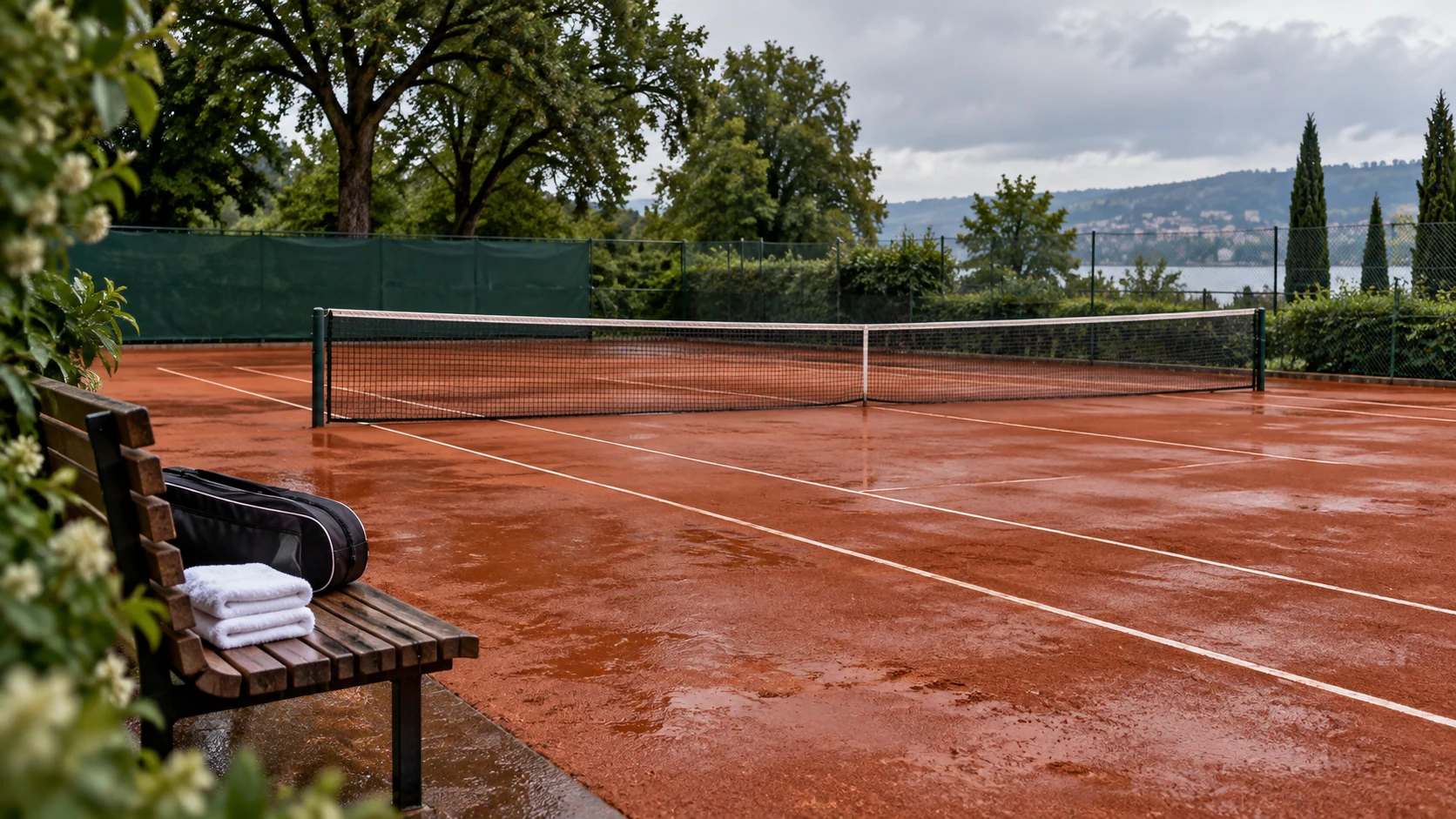
Clay courts
Clay usually produces a higher, slower bounce and longer rallies. Sliding is part of efficient movement, and point construction often depends on patience, heavy topspin and creating space before attacking.
Hard courts
Hard courts cover a broad range of speeds. Acrylic systems can be tuned through surface materials and court construction, so one hard-court event may play faster or slower than another.
Why surfaces affect tactics
Bounce height, friction and how quickly the ball loses speed after contact all influence court positioning. A player who attacks the net may prefer a lower, skidding bounce, while a heavy topspin baseliner can benefit from extra time and height.
How to adapt as a recreational player
Shorten the backswing on faster courts, give yourself more net clearance on clay, and adjust footwork rather than forcing the same movement pattern on every surface.